

2026 CNELC Newsletter
Message From the Chair
Department Spotlights
Kudos
Message From the Chair
The Department of Classical and Near Eastern Languages and Civilizations (CNELC) at George Washington University is flourishing, and we send along our heartfelt gratitude to our alums and to friends!
CNELC is a broad and yet cohesive set of five program units that include programs in Classical and Ancient Near Eastern Studies (CANES), Arabic, Hebrew, Persian and Uyghur. We offer majors in CANES and Arabic, and we offer minors in CANES, Arabic and Hebrew. We do not offer majors or minors in Persian or Uyghur, but we are pleased to offer three full years of Persian, as well as Beginning and Intermediate Uyghur. This year, we are also offering Biblical Hebrew to a nice cohort of students!
We are very proud of the department’s growth and its long history. Indeed, the Department of Classical Studies was there at the very beginning—at the time of the founding of George Washington University in 1821. We are delighted to have served GW students, alums and friends for 200+ years, and we look forward to continuing to do so. You have our deepest gratitude for your kindness and support!
Our department is a vibrant one, in terms of teaching, service and research. Every semester we have several hundred students in CNELC courses. In other words, the study of ancient and modern languages and civilizations is thriving in the CNELC Department.
Within this newsletter, you will read about some of the recent faculty and student activities and achievements, and we intend to continue to build on these for the coming year. We are grateful that you are taking the time to read this newsletter and we would love to hear from you. Please send us a note and let us know how you are doing!
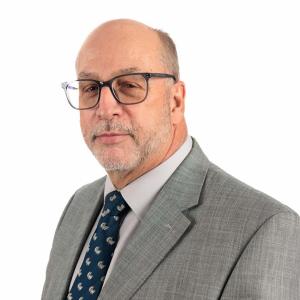
Christopher Rollston
Chair, Department of Classical and Near Eastern Languages and Civilizations
Department Spotlights

Celebrating Professor Cline’s New Book: Love, War, and Diplomacy
The acclaimed author of 1177 B.C.: The Year Civilization Collapsed, Professor Eric H. Cline debuted a new book titled Love, War, and Diplomacy: The Discovery of the Amarna Letters and the Bronze Age World They Revealed. It’s a spellbinding account of the archaeological find that opened a window onto the vibrant diplomatic world of the ancient Near East.
In 1887, an Egyptian woman made an astonishing discovery among the ruins of the heretic king Akhenaten’s capital city, a site now known as Amarna. She found a cache of cuneiform tablets, nearly 400 in all, that included correspondence between the pharaohs and the mightiest powers of the day, such as the Hittites, Babylonians and Assyrians. In Love, War, and Diplomacy, Cline tells the story of the Amarna letters and the dramatic world of the Bronze Age they revealed.

Professor Orian Zakai’s Research Fellowship
Professor Orian Zakai spent fall 2025 on research leave at the Herbert D. Katz Center for Advanced Judaic Studies at the University of Pennsylvania. Dr. Zakai was selected to be part of a cohort of Jewish studies fellows who convened at the center around the theme “New Frontiers in Contemporary Jewish Life: Cultural Expansion, Encounters and Experiments.”
During her time at the center, Dr. Zakai worked on her project “The Israeli Organ: Identity, Emotion and Embodiment after October 7.” Her work included analyzing literary texts, media discourse and cultural narratives through the lens of embodiment and affect. The project seeks to offer an initial framework for thinking of the current moment of rupture in Jewish Israeli subjectivity from the perspective of literary and cultural studies. She presented her project at a public workshop at the Katz Center as well as the annual meeting of the Association for Jewish Studies held in Washington, D.C., in December.
Kudos
- Mohssen Esseesy led a Business Arabic Immersion Workshop hosted by GW-CIBER and the Sultan Qaboos Cultural Center (SQCC) in Washington, D.C.
- Ebtissam Oraby, together with colleagues Samuel Burmester and Arshad Imtiaz Ali, published an article titled “Learning Through Stories: Bringing Indigenous Muslim Wisdom into Science Education” in Intersections/SSRC.
- Christopher Rollston was quoted in the Haaretz article “Unknown Alphabet in Dead Sea Scrolls Have Been Cracked, Scholar Says.”